
Arrest Warrants in Dallas County
A Dallas County arrest warrant is a judge's signed order to take a named person into custody. Sworn facts have to back it. It never rests on a bare request to arrest. On the county's Magistrates and Warrants page, the review step is spelled out: a neutral and detached magistrate reads the complaint and makes an independent call on probable cause. Probable cause simply means enough factual basis for a reasonable belief that a crime happened and that this person committed it. The warrant opens a court case rather than ending one. Once served, the person can be booked, brought before a judicial officer, and given release or bond terms under Alabama procedure. The charge itself stays alive until the court resolves it.
Dallas County Complaint Process
Dallas County lays out a clear path from complaint to warrant. First, the complainant reports the matter to the agency with jurisdiction. For a county misdemeanor outside Selma, that means the Sheriff's Department, and an investigator then walks the complainant over to the magistrate. Felonies move differently. The municipality or the Sheriff investigates, and afterward the officer or investigator goes with the complainant to the Circuit Clerk's Office.
- Report the alleged offense to the proper police agency or Sheriff.
- An investigator reviews the facts and accompanies the complainant when required.
- The complainant gives a sworn deposition, or an officer sends one electronically.
- A magistrate independently reviews probable cause.
- If the standard is met, the magistrate issues the arrest warrant for service.
Filing through this Dallas County complaint process costs nothing. One caution applies, though. Charges generally cannot be dropped at will once filed, absent extenuating circumstances, and court costs may still follow.
What a Dallas County Arrest Warrant Contains
Dallas County publishes no sample entries from a live warrant list. For a reliable document schema, look at Alabama's official C-64 complaint and warrant form. The C-65a covers an alias warrant after a failure to appear, and its basis is different.
| Court and case | The venue and case identifier connect the warrant to the correct file. |
|---|---|
| Named defendant | The legal name identifies the person officers are commanded to arrest. |
| Offense and facts | The charge and sworn complaint state the claimed basis. |
| Complainant or officer | The person presenting facts is identified with the oath or deposition. |
| Judicial finding | The magistrate's signature records the probable-cause decision. |
| Command and return | The order directs arrest, while the return records service action. |
| Bond | Bond may be set or addressed later; Dallas publishes no warrant bond schedule. |
Copy any case or warrant number exactly when you request status. Dallas County documents no public number format, so a made-up sample would only mislead.
Dallas County Warrant Form Sources
Alabama's official criminal-procedure appendix names the complaint, warrant, alias-warrant, probation-warrant, bond, and search-warrant forms. Those blank templates explain what fields a record carries. They reveal no person's case and create no public Dallas County search. Open the Alabama criminal forms appendix for the C-64 and C-65a references.
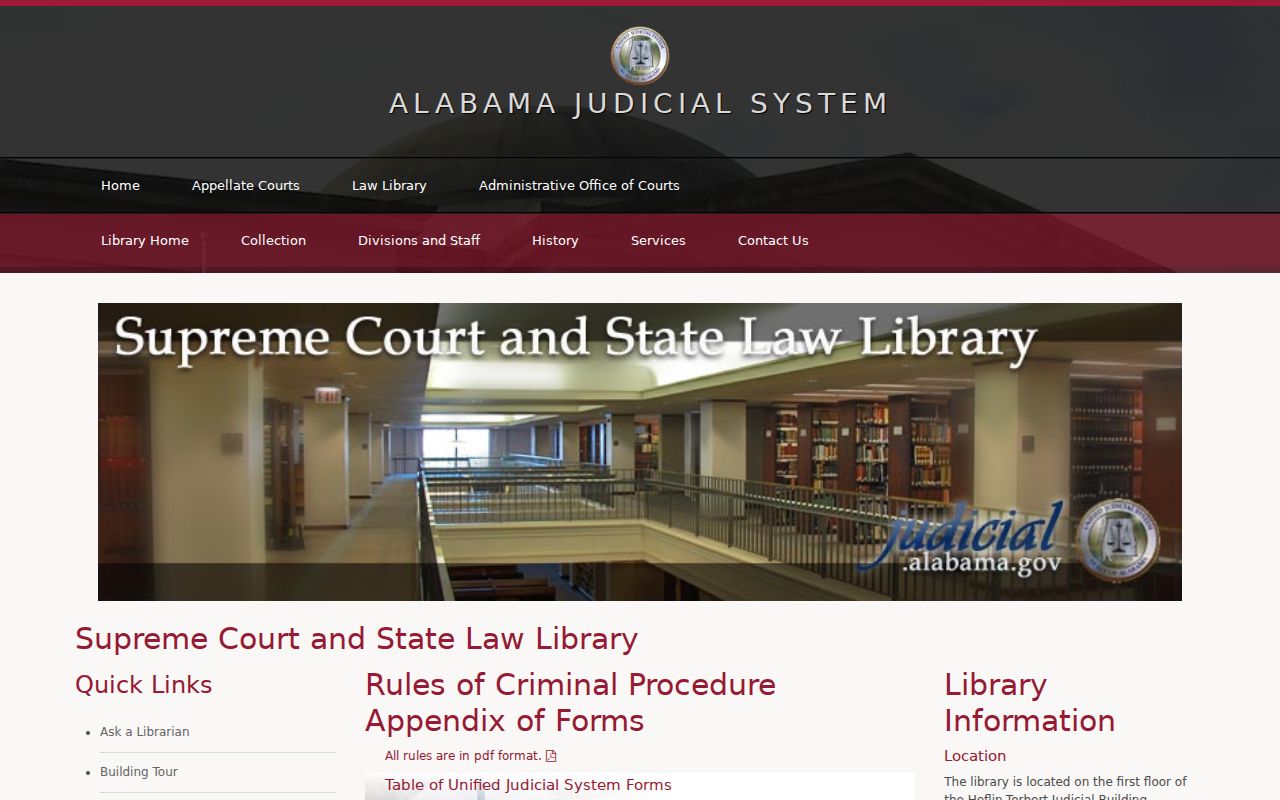
A blank form offers structure, not answers. It cannot show whether a Dallas County arrest warrant is active, served, or withdrawn.
How Dallas County Arrest Warrants Are Served
The Dallas County Sheriff's Department says its deputies serve arrest warrants along with other court process. Inside city limits, Selma Police handles its own matters. Other authorized officers may serve orders within their legal authority, while the magistrate who issued the warrant plays no law-enforcement role. Service means executing the command to arrest. Return means the officer reports the execution back to the issuing court, and after custody the person moves through booking, an initial appearance, and bond terms. Alabama Code §15-10-2 and Alabama criminal procedure govern the officer's authority and execution, though the exact course depends on the order and the holding agency. Dallas County posts no dedicated warrant window, surrender hours, or guaranteed walk-through process. Call before you show up. Ask whether booking and bond run through the current temporary jail or another site.
Unserved Dallas County Arrest Warrants
Under the county's warrant page, an arrest warrant is not public until served. That local rule is why a Dallas County records search may not surface a suspected order, and it keeps an active enforcement step from leaking early. Sealed investigative material, juvenile records, and youthful-offender information face added limits.
Access Limit: Dallas County's official court source says an arrest warrant is not a public record until it has been served.
A narrow Alabama Open Records Act request can reach releasable material, but it cannot force out protected content. Ask the custodian for the legal basis behind any denial. A denial, an empty result, or a clerk who cannot discuss an unserved matter proves nothing about whether a warrant exists.
Arrest Warrant vs Summons vs Bench Warrant
These court tools call for different responses. An arrest warrant commands custody. A summons directs a person to appear without any arrest command. A bench or alias warrant typically follows a missed duty inside an existing Dallas County case.
| Feature | Arrest Warrant | Summons | Bench Warrant |
|---|---|---|---|
| Basis | Probable cause of an offense | A charge handled by ordered appearance | Missed court or noncompliance |
| What it orders | Arrest and court processing | Appearance on a stated date | Arrest and return to court |
| Dallas route | Sheriff plus issuing court | Court named on the paper | Issuing District, Circuit, or Municipal Court |
| Response | Attorney, surrender, booking, and bond | Appear as directed | Reset, recall, appearance, payment, or bond as allowed |
Alabama's documented failure-to-appear form is called an alias warrant. For that court route in more depth, see the companion Dallas County bench warrant process.
Restricted Alabama Warrant System
The ALACOP Warrant Management System is an official statewide tool, but access is restricted. Its login page and manual describe account controls, monitored use, and entry limited to law-enforcement or criminal-justice personnel. It is not a public Dallas County arrest-warrant search. View the Alabama Warrant Management System login source only to understand that access boundary.
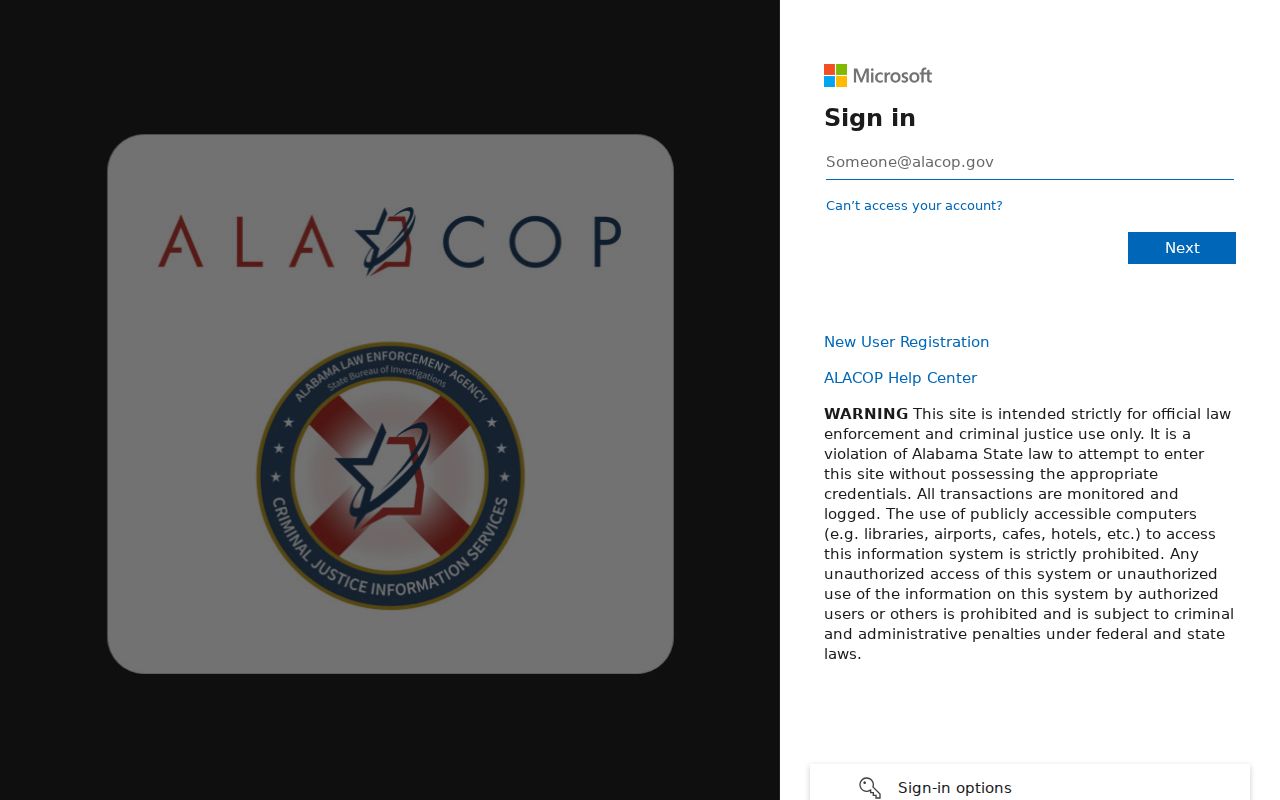
The login screen is not for public warrant checks. ALEA receives warrant data under state law, but Alabama has no statewide public self-service warrant search. Dallas County residents cannot use it. Alabama's traffic tools are public for eligible citation resolution, but they are not a general arrest-warrant database.
What to Do If There's a Warrant for You
Call the Sheriff's main office at (334) 874-2530. Then contact the likely issuing court. Dallas County's official direction calls for an in-person Sheriff visit whenever a person suspects a county warrant. Ask about risks and logistics before you travel. Give your full legal name, date of birth, case or citation number, and likely court. Ask whether bond is set, and whether counsel can arrange a scheduled surrender.
Act Carefully: An attorney can confirm the court, seek a recall or quash order, and arrange surrender without promising that arrest will be avoided.
Skip any generic online fee. The issuing court must withdraw or recall the order, or the person must be processed under it. Ask where to report and what identification to bring. Ask which facility handles booking, what payment form is accepted, and when the initial appearance will occur. Dallas County publishes no arrest-warrant bond schedule. It lists no fixed recall fee either.
Dallas County Legal Help Routes
Warrant status and legal advice are two different services. The Circuit Clerk can report what the file shows. Staff cannot tell you whether to surrender, challenge probable cause, or file a particular motion. Those calls belong to you and your counsel. The Dallas County court site posts official legal-service referrals. Its court-provided legal services page covers Alabama State Bar, Legal Services Alabama, and AlabamaLegalHelp routes.
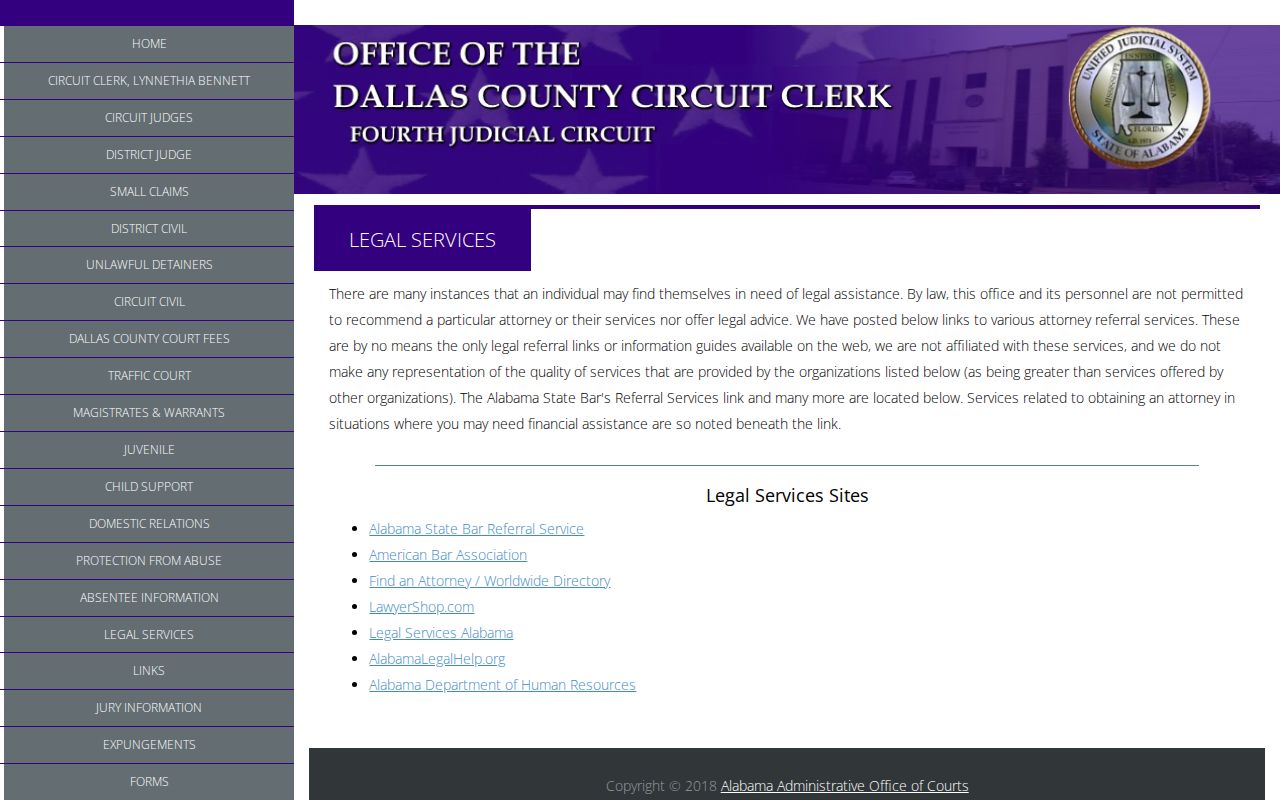
The referral list helps you find advice without turning the clerk into counsel. Each provider sets its own eligibility and representation rules. Counsel matters most for felonies. For a probation warrant, hold, federal matter, or out-of-state warrant, a lawyer can also identify the correct agency and court before any appearance in Dallas County.
Dallas County and Federal Service
County and federal warrants move through separate chains. Alabama matters stay local. County magistrates, District Court, Circuit Court, Selma Municipal Court, the Sheriff, and city police handle Dallas County cases within their roles. Federal complaints or indictments proceed in federal court. The U.S. Marshals Service handles federal warrant and fugitive duties. Dallas County sits in the Selma Division of the Southern District of Alabama. The federal Selma courthouse is not staffed full time. Go there only when a court official directs it. A Marshals task force is not a public county status counter, and a federal fugitive program is not a Dallas County arrest-warrant roster. Ask whichever agency claims the warrant. Ask for the issuing jurisdiction, court, and case number; an Alabama county court cannot recall a federal order, and a federal office cannot resolve an unrelated Selma municipal case.
Confirm Dallas County Warrant Closure
A bond gets someone out of jail, but it does not end the case. When a judge recalls, quashes, or withdraws a warrant, the paper dies while the charge can live on. Either way, get proof. That means a receipt or a signed order from the clerk of the issuing court, and then ask when the court file will reflect the change. Confirm the Sheriff has been notified too. Dallas County posts no schedule for how fast records update, so a written order beats any oral promise or old third-party listing every time.
If the Sheriff's record and the court file disagree, hand both offices the same case number and warrant details and ask which order controls. Keep the next court date, follow every bond condition, and treat written court proof plus serving-agency confirmation as the only real closure. The Dallas County warrant records overview adds the wider court and public-access picture.